

Key Takeaways
- Personalized care plans help your loved one get the right support at the right time.
- A welcoming atmosphere, thoughtful spaces, and shared meals make a real difference in daily life.
- Consistent, well-trained caregivers build trust with residents and families alike.
- Memory care and respite care expand the range of support available as needs change.
- An in-person visit can help you feel more at ease with your decision.
How to Find the Right Assisted Living Community
Choosing an assisted living community for someone you love is one of the most meaningful decisions you’ll make. There’s a lot to consider, and it’s easy to feel overwhelmed by the options. Knowing what to look for makes the search feel more manageable and gives you the clarity to move forward.
The right community will offer personalized care, a warm and welcoming atmosphere, trained and compassionate staff, and a full range of support options that can grow with your loved one’s needs. If you’re still exploring what assisted living includes, understanding the full picture makes it much easier to compare your options and ask the right questions.
The Role of Personalized Care in Assisted Living
A good assisted living community recognizes that no two people are alike. Care plans should be built around your loved one’s specific needs, daily routines, and personal preferences, not a one-size-fits-all approach. That might mean help with getting dressed in the morning, medication reminders, or simply having a friendly face check in throughout the day.
What matters just as much is that care evolves over time. As your loved one’s needs shift, their support should shift with them. Look for a community where care is regularly reviewed and adjusted so nothing slips through the cracks. The goal is to offer the right amount of help, while still honoring each person’s independence and sense of self. Learning about activities of daily living and how they’re supported can give you a clearer sense of what thoughtful, personalized care really looks like in practice.
A Warm Environment That Feels like Home
Comfort and Daily Life
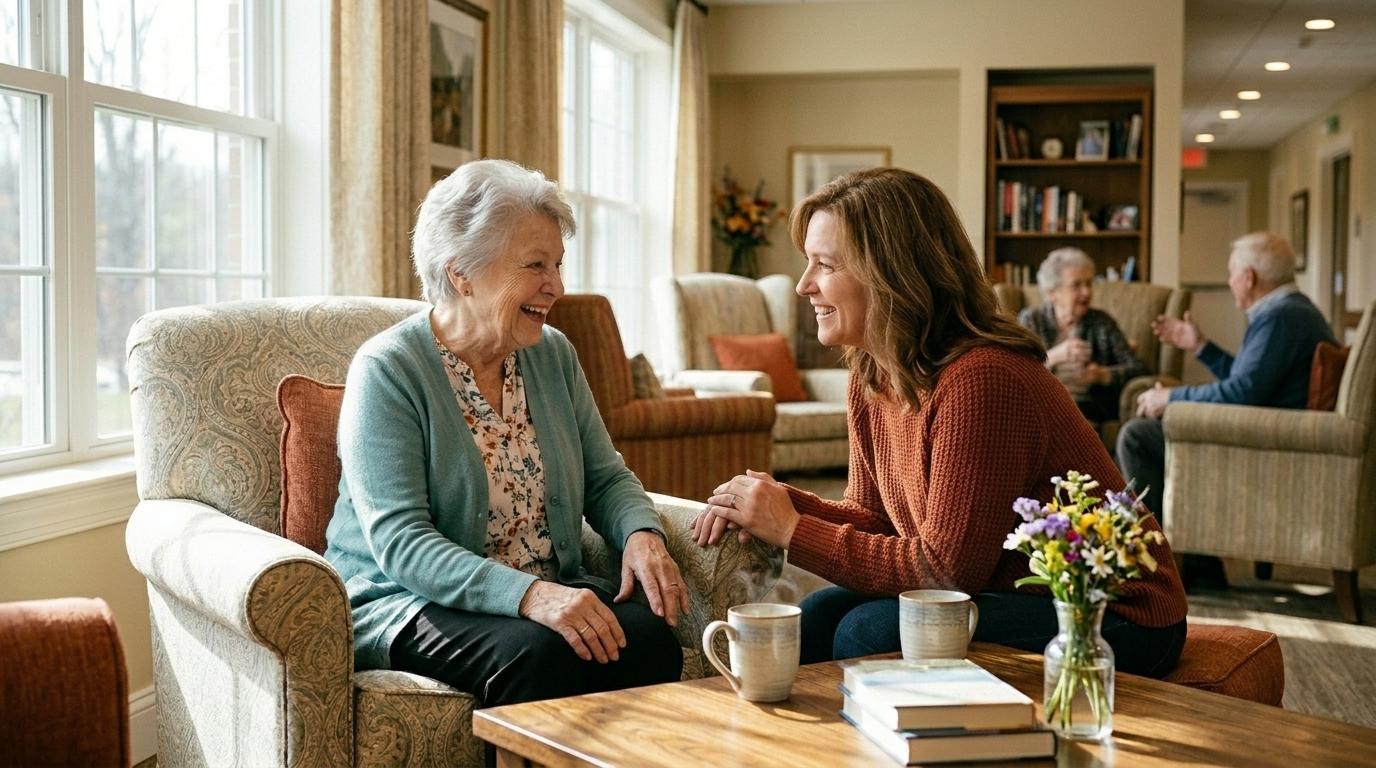
When you walk into a senior living community, pay attention to how it feels. Does it feel warm and lived-in, or does it feel cold and institutional? Look for soft lighting, comfortable seating, and common areas where residents are actually spending time together. A plush armchair by a sunny window says a lot more than a brochure ever could.
Thoughtfully designed spaces give your loved one room to relax, socialize, and feel at home. The physical environment plays a big role in emotional well-being, so it’s worth taking your time to notice the details. You can get a sense of what welcoming spaces look like by browsing the community gallery before your visit.
Dining and Social Connection
Mealtimes are about more than food. They’re a chance to sit down with neighbors, share conversation, and feel part of a community. Look for a community where nourishing meals are served in a friendly, relaxed dining room rather than a cafeteria-style setting. The aroma of a home-cooked meal and the hum of easy conversation go a long way in making a place feel like home.
Beyond meals, ask about social activities, creative programs, and outings that bring residents together. A full calendar of engaging experiences helps your loved one stay connected, active, and genuinely enjoy each day. Staying socially engaged as we age has real, lasting benefits for both mental and emotional well-being.
Staff Compassion, Training, and Consistency
The people providing care matter just as much as the programs offered. Look for a community where caregivers receive ongoing training across all levels of care, from assisted living to memory care. That kind of commitment means your loved one is always supported by someone who knows what they’re doing and genuinely cares.
Consistency also matters. When your loved one sees familiar faces every day, trust builds naturally. Ask how the community handles staff scheduling and whether families receive regular communication about their loved one’s care. Open, responsive communication is a strong sign that a community takes its relationships with families seriously.

Memory Care, Respite Care, and the Full Range of Support
Memory Care
If your loved one is living with Alzheimer’s or another form of dementia, specialized memory care can offer meaningful support. A well-designed memory care program uses structured daily routines, familiar activities, and purposeful engagement to help residents feel calm, safe, and connected. Programs like music, art, and pet therapy can offer comfort in a way that feels natural rather than clinical.
The right environment for memory care should feel reassuring, not restrictive. Look for a community where the focus is on emotional well-being and dignity every single day. Learning more about what dementia involves can also help you ask better questions and feel more prepared as you explore your options.
Respite Care
Short-term care, sometimes called respite care, is a valuable option for families navigating a period of transition. Whether you need a few weeks of professional support while you travel or recover from your own health needs, a short-term stay gives your loved one attentive care in a comfortable setting. It’s also a low-pressure way to experience a community before committing to a longer-term arrangement.
How to Take the Next Step in Your Search
When you visit a community in person, come prepared with questions. Ask about how care plans are created, how often they’re updated, and what a typical day looks like for residents. Notice how staff interact with the people in their care. That warmth, or the absence of it, tells you a great deal.
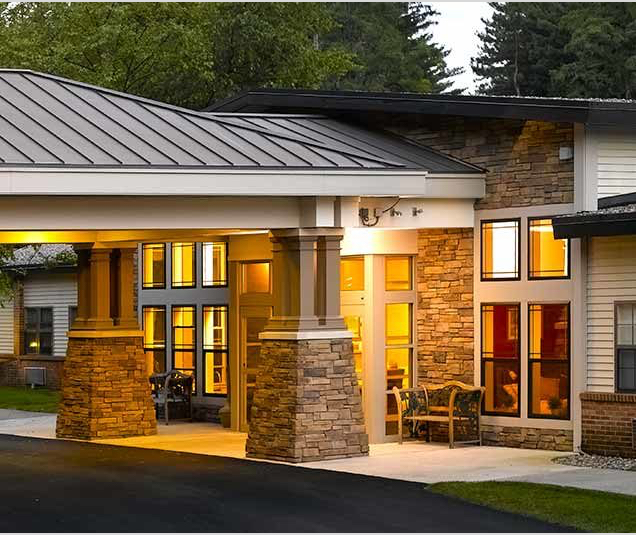
Pay attention to whether the community’s values align with what matters most to your loved one. At Peregrine Senior Living at Guilderland, every detail of daily life is shaped by a deep respect for each resident’s story, independence, and well-being. Schedule a visit to see it for yourself and take that next step with peace of mind.









No more posts